What Can I Power With This Generator?
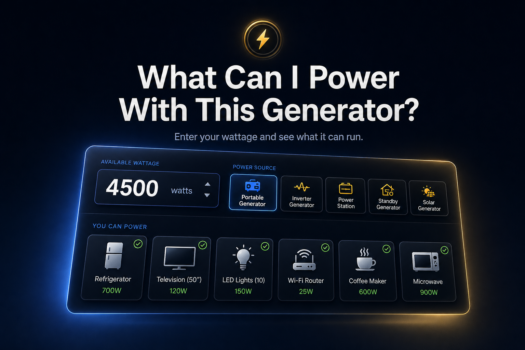
Enter the wattage and see which common appliances may be safe, risky, or not recommended.
What Can I Power with This Generator? – Get Answers!
A generator can look powerful on paper, but the real question is simple: what can it actually run when you need it? This tool helps you enter a wattage amount and see which everyday appliances may be a good fit, which ones need caution, and which ones may be too much for that generator or power station.
Use it for portable generators, inverter generators, power stations, solar generators, and standby generators. It is especially helpful if you are comparing products and want a clearer idea before clicking through to buy.
How This Generator Wattage Tool Works
Enter the available wattage for the generator, power station, or backup power system you are considering. Then choose the power source type that best matches the product.
The tool will sort common household items into three groups: items that are likely safe to run, items where you should watch starting watts, and items that may not be recommended for that wattage range.
This matters because many appliances use more power when they first start. A refrigerator, sump pump, air conditioner, or well pump may have a lower running wattage but a much higher starting wattage. That short surge can overload a smaller generator if you are not careful.
Why Starting Watts Matter
One of the biggest mistakes people make is looking only at running watts. Running watts are the amount of power an appliance needs once it is already operating. Starting watts are the extra power some appliances need for a few seconds when the motor or compressor turns on.
That is why a generator may handle lights, a TV, a Wi-Fi router, and a refrigerator, but struggle if you add a microwave, air conditioner, or sump pump at the wrong time. The safest approach is to start the largest appliance first, let the generator stabilize, then add smaller items one at a time.
What You Can Check With This Tool
This tool can help you estimate whether a generator may power everyday items such as a refrigerator, freezer, lights, television, Wi-Fi router, laptop, microwave, coffee maker, window air conditioner, sump pump, furnace blower, well pump, washing machine, electric dryer, electric water heater, or central air conditioner.
It can also help you compare different wattage ranges before buying. For example, if a 4,500-watt generator feels too close to the limit, the tool can help you compare a higher wattage range so you can see whether stepping up makes more sense.
Portable Generators vs. Power Stations
Portable gas generators and inverter generators are usually judged by running watts and starting watts. They can be useful for emergency backup, outdoor work, RV use, camping, and storm preparation.
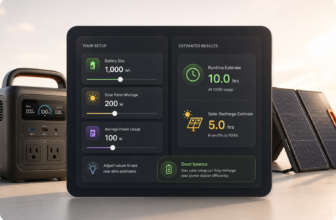
Power stations and solar generators are different. Their watt output tells you what they may be able to run, but their battery capacity tells you how long they may run it. That is why this tool also includes a runtime-style estimate for power stations and solar generators.
For example, a power station may have enough output to run a small appliance, but the battery may drain quickly if the appliance uses a lot of power. A phone charger or Wi-Fi router may run for many hours, while a microwave or heater may drain the battery much faster.
Use This Before You Buy
Before choosing a generator, use this tool to compare the wattage number listed on the product page with the appliances you actually care about. If the result feels too close, moving one size up may give you more breathing room.
A generator should not be chosen only by price. The better question is whether it gives you enough usable power for your situation without constantly pushing the unit to its limit.
Important Safety Note
This tool gives general estimates only. Actual power needs vary by appliance, age, model, starting watts, fuel type, battery capacity, transfer switch setup, and how many items are running at the same time.
Always check the generator manual, product label, appliance label, and manufacturer guidance before connecting equipment. For home backup use, especially with standby generators or transfer switches, consider using a licensed electrician or qualified installer.
FAQ: Frequently Asked Questions
What can I power with a generator?
What you can power depends on the generator’s running watts, starting watts, and the appliances you want to use. Smaller generators may handle lights, phones, laptops, a Wi-Fi router, and a TV, while larger generators may support refrigerators, pumps, microwaves, RV air conditioners, or selected home essentials.
Why are starting watts important?
Starting watts are the extra watts some appliances need when they first turn on. Refrigerators, air conditioners, sump pumps, well pumps, and furnace blowers can need much more power at startup than they use while running. That is why you should start larger appliances first, then add smaller items once the generator is stable.
Can I run my whole house with a portable generator?
Some large portable generators can support important home essentials, but most are not designed to run every appliance in a house at the same time. Central air conditioners, electric dryers, electric water heaters, electric ranges, and well pumps can require a lot of power. Whole-home backup usually requires careful load planning and proper transfer equipment.
Is a power station the same as a generator?
A power station is different from a gas generator. A gas generator produces power using fuel, while a power station stores power in a battery. With power stations, you need to look at both output watts and battery capacity. Output watts tell you what it may run, while battery capacity helps estimate how long it may run.
How accurate is this generator wattage tool?
This tool gives general estimates based on common appliance wattage ranges. Actual power use can vary by model, age, startup surge, fuel type, battery capacity, and how many items are used at once. Always check your generator manual, appliance label, and manufacturer guidance before connecting equipment.