Power Station With Solar Panels Calculator
Estimate what size power station you may need, how long it may run your devices, and how long solar panels may take to recharge it.
A power station can look impressive on a product page, but the real question is whether it can run the devices you actually care about. Battery size, output watts, solar panel wattage, and sunlight hours all work together. If one of those numbers is too low, your setup may not perform the way you expected.
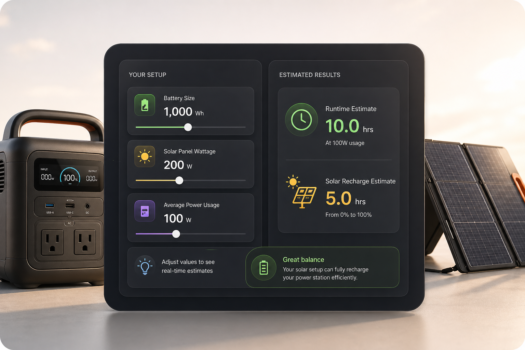
The Power Station With Solar Panels Calculator helps you estimate what size power station you may need, how long it may run selected devices, and how long solar panels may take to recharge the battery. It is useful for home backup, camping, RV travel, emergency prep, off-grid weekends, and anyone comparing portable power stations or solar generators.
How This Power Station and Solar Panel Calculator Works
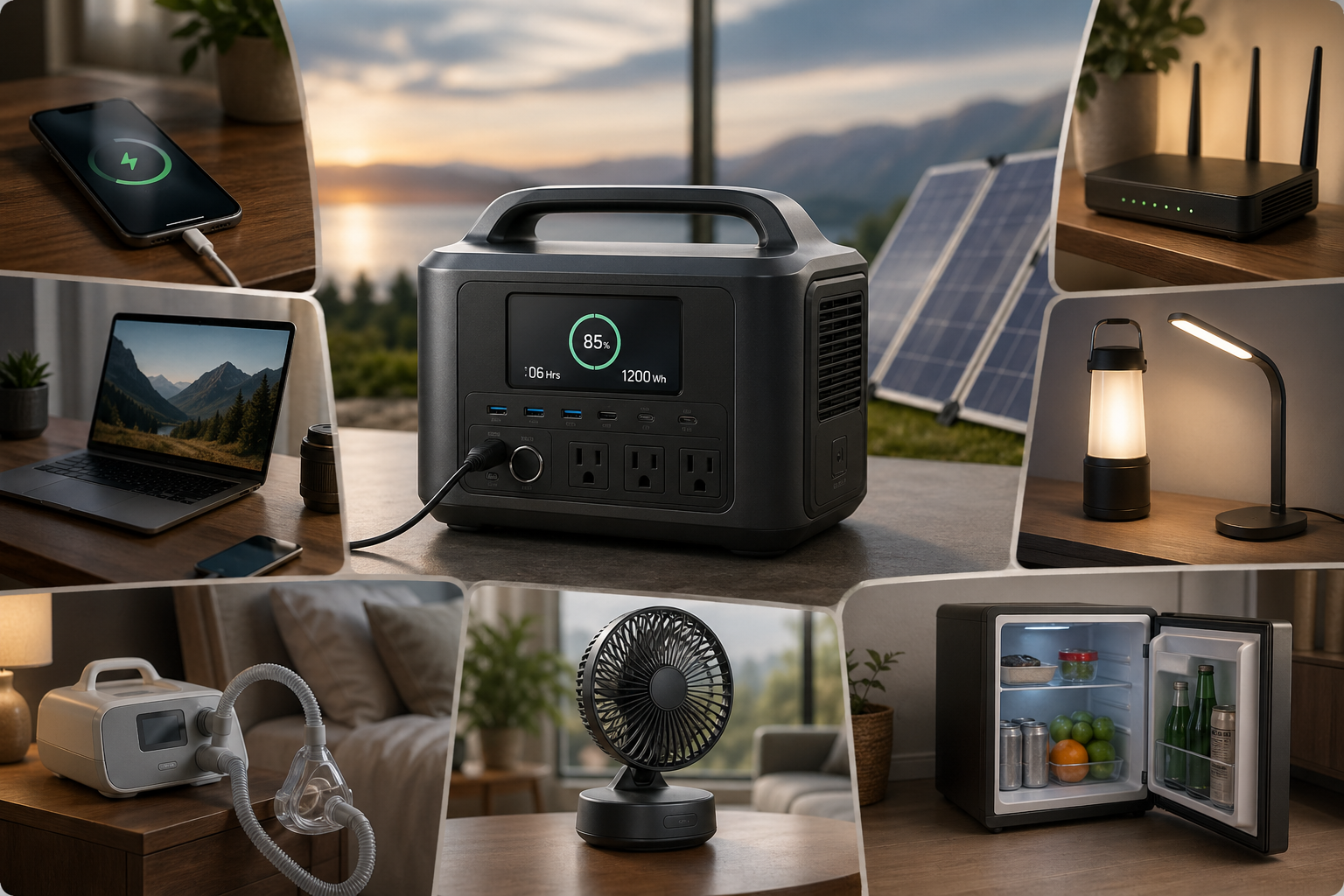
This calculator lets you select common devices such as phone charging, laptops, Wi-Fi routers, LED lights, TVs, mini fridges, CPAP machines, fans, coffee makers, microwaves, small heaters, and portable coolers.
You can also enter your power station battery size in watt-hours, your solar panel wattage, and your estimated peak sun hours per day. The tool then gives you a practical estimate for selected running watts, expected runtime, recommended power station size, and solar recharge time.
This is helpful because a power station is different from a gas generator. A generator keeps producing power as long as it has fuel. A power station stores power in a battery, so runtime depends heavily on battery capacity and how much power your devices draw.
Why Watt-Hours Matter
Power stations are often advertised by watt-hours, shown as Wh. This number tells you how much energy the battery can store. A 500Wh power station may be fine for phones, lights, and a router, but it may not last long with higher-demand devices.
A larger 1000Wh, 1500Wh, 2000Wh, or 3000Wh unit may give you more flexibility, especially if you want to run a mini fridge, CPAP machine, TV, fan, or several devices during an outage.
The calculator uses battery capacity to estimate runtime, but it also leaves room for real-world losses. Most power stations do not deliver every watt-hour on the label because inverter efficiency, battery protection, temperature, and device behavior can reduce usable energy.
Why Solar Panel Wattage Matters
Solar panels can help recharge a power station, but charging speed depends on more than the panel rating. A 200W solar panel may not deliver 200 watts all day. Weather, shade, angle, temperature, cable losses, and the power station’s solar input limit can all affect charging.
That is why the calculator includes both solar panel wattage and peak sun hours per day. This gives a more realistic starting point than simply assuming perfect charging conditions.
If your daily solar input is too low, your power station may drain faster than your panels can recharge it. If you plan to rely on solar during outages or camping trips, this estimate can help you compare different battery and panel combinations before buying.
What Size Power Station Do You Need?
The right size depends on your devices. Light use, such as phones, laptops, lights, and a Wi-Fi router, may only require a smaller power station. Devices like mini fridges, CPAP machines, TVs, fans, and coolers may need more battery capacity if you want several hours of runtime.
High-demand items such as microwaves, coffee makers, and small heaters can drain a battery quickly. Even if a power station can run them, it may not run them for long. For those devices, you should check both the continuous output rating and the battery capacity.
For many shoppers, the decision comes down to two questions:
Can the power station run the device?
How long can it run the device before needing a recharge?
This tool helps answer both.
Use the Results Before You Buy
Once the calculator gives you a recommended range, compare that estimate with the power stations you are considering. Look at battery capacity, continuous output watts, surge output, solar input limit, recharge time, outlet types, weight, and warranty.
If your result is close to the limit, moving one size up may be worth considering. A larger battery can give you more room for longer outages, cloudy weather, overnight use, or unexpected device needs.
A power station with solar panels can be a smart option, but it works best when the battery size, solar input, and actual device load are matched properly.
Important Solar Power Station Note
This calculator provides general estimates only. Actual runtime and recharge time can vary by power station model, battery condition, inverter efficiency, solar panel quality, sunlight, weather, shade, temperature, panel angle, cable setup, and how your devices cycle on and off.
Always check the product manual, battery capacity, continuous output rating, surge rating, solar input limit, and manufacturer guidance before buying or connecting important equipment.
FAQ
What size power station do I need?
The right size depends on the devices you want to run and how long you want to run them. Phones, laptops, routers, and lights may only need a smaller power station, while a mini fridge, CPAP machine, TV, fan, microwave, or heater may require a larger battery capacity.
How long will a power station run my devices?
Runtime depends on battery capacity, selected device wattage, inverter efficiency, and how the devices behave while running. A low-watt device like a router may run for many hours, while a microwave, coffee maker, or heater may drain the battery much faster.
How many solar panels do I need to charge a power station?
That depends on the power station’s battery size, solar input limit, panel wattage, and available sunlight. A larger battery may need more panel wattage or more sun hours to recharge in a practical amount of time.
Why does solar recharge time change so much?
Solar recharge time changes because panels rarely produce their full rated wattage all day. Weather, shade, panel angle, temperature, cable losses, and the power station’s solar input limit can all affect charging speed.
Can a power station replace a gas generator?
A power station can replace a gas generator for some light to moderate uses, especially indoors, camping, RV travel, and quiet backup needs. However, gas generators often provide longer runtime for heavy loads because they can keep running as long as fuel is available.