Whole House Generator Size Chart: Choose the Right Power for Your Home
Power outages are becoming more frequent across many parts of the country due to severe storms, aging electrical infrastructure, and increased energy demand. For homeowners who rely on electricity for heating, cooling, refrigeration, and daily routines, losing power for even a few hours can be more than an inconvenience.
Installing a standby generator can solve that problem, but choosing the correct size generator is critical. If the generator is too small, it may overload when large appliances start. If it is too large, you could spend thousands more than necessary.
This guide provides a clear whole house generator size chart to help you estimate the right generator capacity for your home.
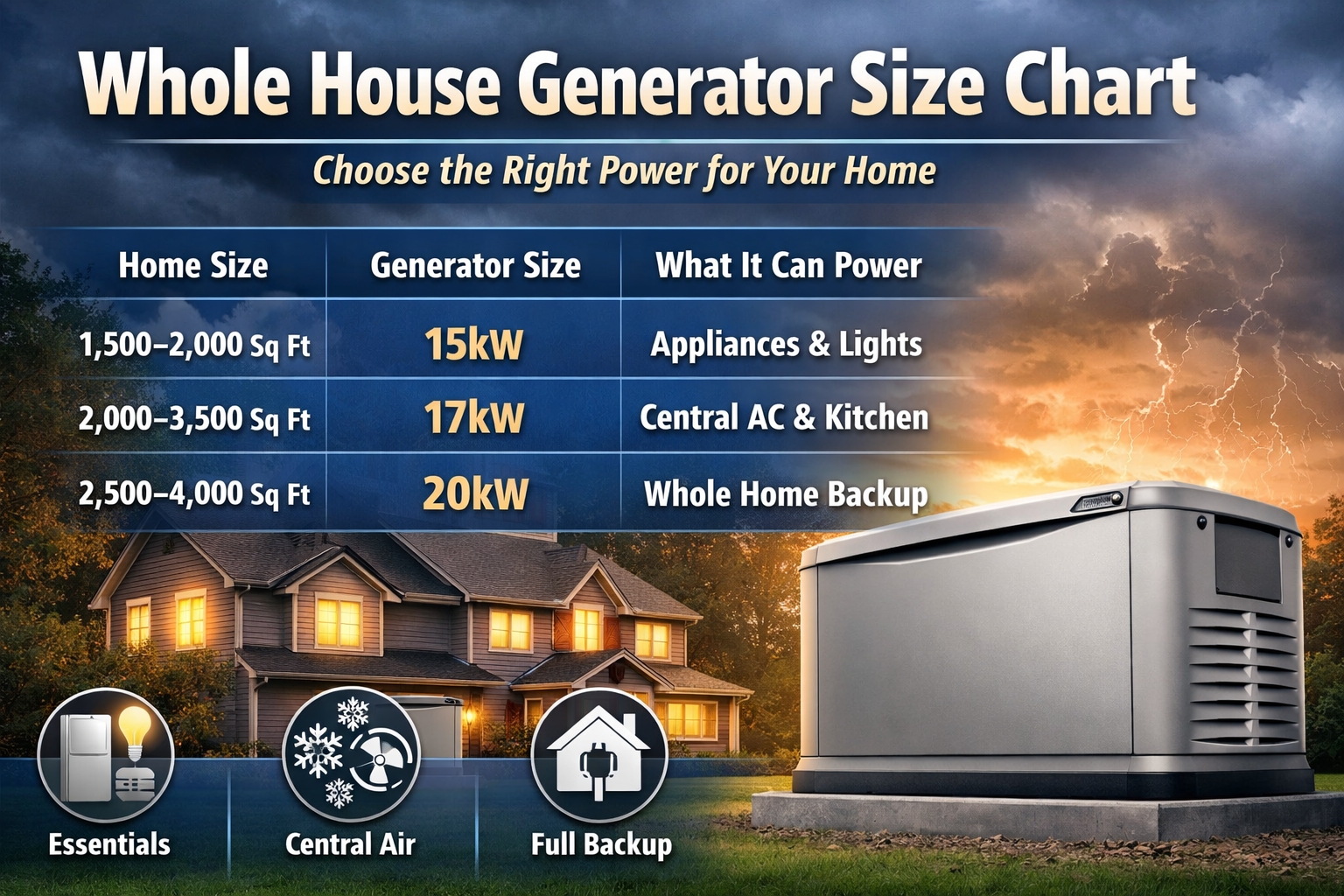
Whole House Generator Size Chart
The chart below shows common generator sizes and what type of home they typically support.
| Generator Size | Typical Home Size | What It Can Run |
|---|---|---|
| 7,500–10,000 watts | Small homes / cabins | Refrigerator, lights, outlets |
| 10,000–12,000 watts | 1,000–1,500 sq ft | Refrigerator, sump pump, microwave |
| 15,000 watts | 1,500–2,500 sq ft | Most appliances + small AC |
| 17,000 watts | 2,000–3,500 sq ft | Central AC, kitchen appliances, pumps |
| 20,000 watts | 2,500–4,000 sq ft | Nearly full home backup |
| 22,000–24,000 watts | 3,500+ sq ft | Large homes with multiple HVAC systems |
These ranges assume typical residential appliances and gas heating systems. Homes that rely on electric heating or large HVAC systems may require additional generator capacity.
Generator Size by House Square Footage
Home size can help estimate generator capacity, although appliance usage matters just as much.
| House Size | Recommended Generator |
|---|---|
| 1,000–1,500 sq ft | 10kW–12kW |
| 1,500–2,500 sq ft | 15kW |
| 2,000–3,500 sq ft | 17kW |
| 2,500–4,000 sq ft | 20kW |
| 3,500–5,000 sq ft | 22kW–24kW |
For example, a 17,000-watt generator is commonly installed in homes between 2,000 and 3,500 square feet because it can support large appliances and central air systems during outages.
If you want a deeper breakdown of that size, see our guide:
What Can a 17,000-Watt Generator Power?
How Generator Size Is Calculated
Generator sizing is based on two types of electrical load.
Running Watts
This is the amount of electricity required for an appliance to operate continuously.
Starting Watts
Many appliances require extra power for a few seconds when they start. Motors, compressors, and pumps are common examples.
For instance:
| Appliance | Running Watts | Starting Watts |
|---|---|---|
| Refrigerator | 700 | 1,500 |
| Microwave | 1,200 | 1,500 |
| Well Pump | 1,500 | 3,000 |
| Central Air Conditioner | 3,500–5,000 | 6,000–9,000 |
A generator must handle both running and starting loads without exceeding its capacity.
Essential Appliances Most Homes Want to Run
When homeowners install backup generators, they typically want to maintain power to the most important systems.
Common essentials include:
• refrigerator and freezer
• lighting circuits
• heating or cooling systems
• well pumps
• internet and communication equipment
• sump pumps
• microwave or cooking appliances
If central air conditioning is included, generator size increases significantly.
For example, many homeowners search for guidance on what size generator runs a central air conditioner because HVAC systems are often the largest electrical load in the home.
Portable Generators vs Whole House Generators
Understanding the difference between portable generators and standby generators helps determine the correct size.
Portable Generators
Portable units usually range between 3,000 and 12,000 watts. These are designed to power a few essential appliances during outages.
They are typically used for:
• refrigerators
• lights
• small electronics
• occasional tools
However, most portable generators cannot run central air conditioning or multiple large appliances simultaneously.
Whole House Standby Generators
Standby generators are permanently installed outside the home and connected to the electrical system through an automatic transfer switch.
These systems usually range between:
15kW and 24kW
They can power most or all household circuits depending on size.
Choosing the Right Generator Size
The best generator size depends on several factors.
Electrical Panel Capacity
Most homes use a 200-amp service panel, which is compatible with common standby generator sizes.
Type of Heating System
Homes with gas furnaces require less generator power than homes with electric heat.
Air Conditioning Systems
Central air units significantly increase required generator capacity.
Home Appliances
Electric dryers, electric ranges, and electric water heaters all require substantial wattage.
Because of these variables, many homeowners install load-shedding systems that temporarily delay certain appliances to prevent generator overload.
Example Generator Load Scenario
Here is a simplified example of how power demand adds up during an outage.
| Appliance | Watts |
|---|---|
| Refrigerator | 700 |
| Central Air | 4,000 |
| Lights | 1,000 |
| Microwave | 1,200 |
| Well Pump | 1,500 |
Total running load: 8,400 watts
Adding startup surge and additional appliances typically pushes recommended generator size to around 15kW–17kW.
Why Many Homes Choose 17kW–20kW Generators
Generators in this range provide strong coverage without the cost of oversized systems.
These units often power:
• central air conditioning
• kitchen appliances
• water pumps
• lighting circuits
• home office equipment
For many households, that means the home can operate normally during extended outages.
Final Thoughts
Choosing the correct generator size is one of the most important steps when installing backup power. A properly sized generator ensures that essential appliances, heating or cooling systems, and everyday electronics remain functional during outages.
For many homeowners, generators in the 15kW–20kW range provide reliable whole-home backup power.
Using a whole house generator size chart can help you estimate the right capacity before speaking with an installer or purchasing equipment.
FAQ
What size generator runs an entire house?
Most homes require generators between 15kW and 22kW to power the majority of appliances and electrical circuits.
Is 20kW enough for a whole house?
Yes. A 20kW generator can power most medium to large homes, including central air conditioning and major appliances.
What size generator runs central air conditioning?
Most central air systems require generators between 15kW and 20kW, depending on the AC unit size and startup power requirements.
How many watts does a house use during an outage?
Typical homes use 8,000–15,000 watts when running essential appliances during power outages.