
Portable generators are often presented as a simple power solution for RVs and motorhomes, but real-world use is more nuanced than most guides suggest. In some situations, a portable generator performs extremely well. In others, it struggles no matter how powerful it appears on paper.
Much of the confusion comes from blending three different systems together: built-in RV generators, portable generators, and battery-inverter setups. Each serves a different purpose, and treating them as interchangeable leads to unrealistic expectations, unnecessary expense, or unsafe configurations.
The reality is straightforward. A portable generator can power an RV or motorhome effectively—but only when the generator size, electrical loads, and usage scenario are properly matched. That requires understanding startup versus running power, knowing which appliances matter most, and recognizing the limits of portable equipment compared to factory-installed systems.
This guide focuses on what actually works in practice. It explains when a portable generator makes sense, when it does not, and what you should realistically expect if you plan to use one for RV camping, boondocking, or backup power. The goal is clarity, not marketing claims.
When a Portable Generator Makes Sense for an RV or Motorhome
A portable generator makes sense when it is used as a supplemental or situational power source, not as a full replacement for a built-in RV generator or campground hookups. In practical terms, this usually means controlled electrical use rather than running everything at once.
Portable generators are well suited for short trips, boondocking with modest power demands, emergency backup while traveling, or charging batteries when solar output is limited. In these scenarios, the goal is reliability and flexibility, not full-coach operation.
They are especially useful for RVs and motorhomes that were not factory-equipped with an onboard generator, or when an existing built-in unit is unavailable, inefficient for short runs, or unnecessarily loud. In those cases, portability, fuel flexibility, and lower upfront cost can be real advantages.
Where problems arise is when a portable generator is expected to behave like shore power. RV electrical systems rely on load management, and portable units require even more attention to what is running and when. Used intentionally, a portable generator can handle lighting, refrigeration, electronics, battery charging, and sometimes air conditioning. Used casually, it will overload, shut down, or trip protection systems.
The key point is simple: portable generators work best when power use is deliberate and limited, not when everything is expected to operate simultaneously.
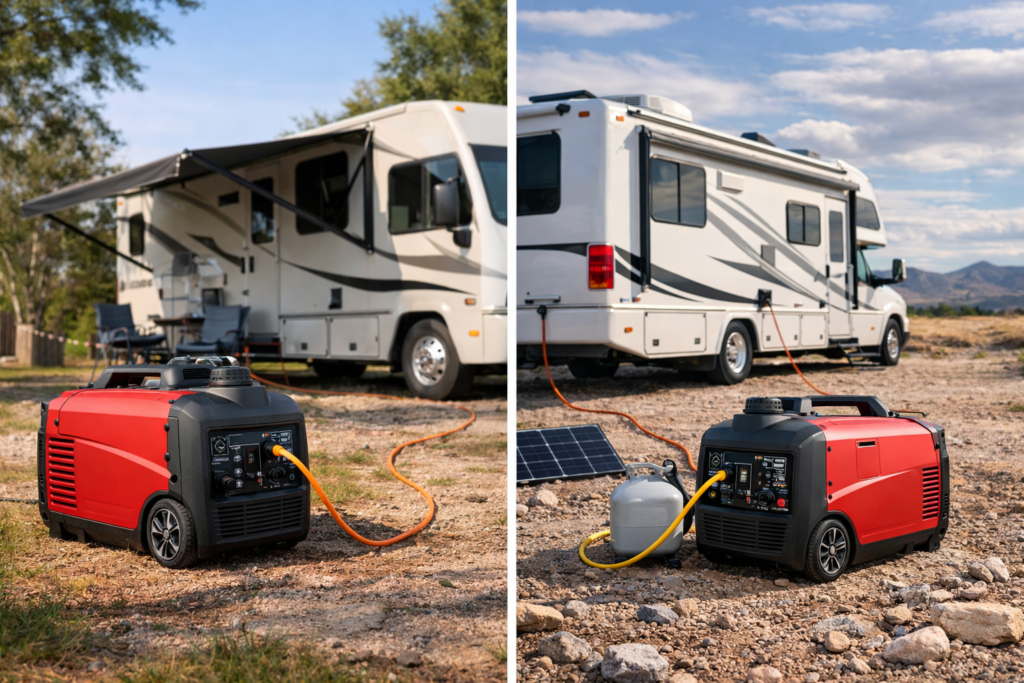
When a Portable Generator Is Not the Right Solution
There are situations where a portable generator is simply the wrong tool for the job, regardless of size or brand. Expecting one to provide uninterrupted, whole-coach power is the most common mistake.
Running multiple air conditioners, electric water heaters, residential refrigerators, and high-draw appliances at the same time is beyond the scope of most portable units. Even larger models struggle with the combined startup loads of these systems, especially in hot weather or at higher elevations.
Portable generators are also not ideal for long, unattended operation. They require refueling, monitoring, and careful placement for ventilation and safety. In contrast, built-in RV generators are designed for extended runtimes, automatic transfer, and integrated exhaust routing.
Noise restrictions can also limit usefulness. Many campgrounds enforce decibel limits or generator hours, which can make even quiet portable units impractical during certain times of day.
If your goal is residential-style power, constant air conditioning, or automatic operation without oversight, a portable generator will feel limiting. Understanding this early avoids frustration and poor purchasing decisions.
Understanding RV Power Needs (Why Wattage Matters More Than Labels)
Generator sizing is not about the RV type alone—it is about what you plan to run and how those loads behave electrically.
Most RV appliances draw two different amounts of power:
- Startup watts, which occur for a few seconds when a motor or compressor turns on
- Running watts, which are lower and sustained during normal operation
Air conditioners, refrigerators, and microwaves all have significant startup demands. A generator that looks sufficient based on running watts alone may shut down immediately when multiple appliances start at the same time.
This is why many portable generators that seem “big enough” on paper fail in real use. Without accounting for startup loads, the system is always operating on the edge of overload.
Proper sizing requires realistic expectations:
- Not everything runs at once
- High-draw appliances may need to be staggered
- Some loads may not be practical at all with a portable unit
This concept becomes especially important when air conditioning is involved, which is covered in detail later in this guide.
Air Conditioning: The Make-or-Break Factor
Air conditioning is the single largest challenge when using a portable generator with an RV or motorhome. Most rooftop AC units require a high startup surge, often exceeding what smaller portable generators can provide.
Some portable generators can run an RV air conditioner under the right conditions:
- The generator has sufficient surge capacity
- Only one AC unit is operating
- Other high-draw appliances are turned off
- A soft-start device is installed on the AC unit
Even then, operation may be marginal in hot weather or at elevation. This does not mean portable generators are ineffective—it means air conditioning requires careful planning and realistic expectations.
For many RV owners, the portable generator is used to power everything except the air conditioner, or to run the AC intermittently rather than continuously. Understanding this distinction helps avoid disappointment.
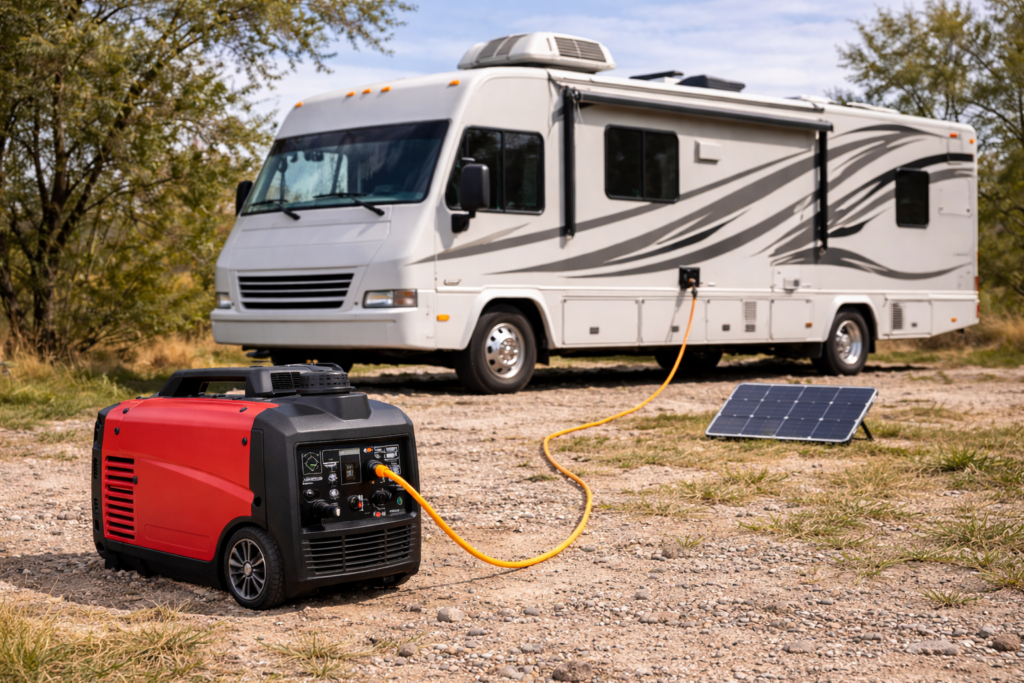
Noise, Placement, and Safety Considerations
Portable generator safety is not optional, especially around RVs and motorhomes where people are sleeping, cooking, and spending long periods in close proximity.
Proper placement is critical. Portable generators must be positioned far enough from the RV to prevent exhaust gases from entering windows, doors, or vents. Carbon monoxide risk is the most serious hazard associated with improper use.
Noise is another practical limitation. Even inverter generators, which are significantly quieter than open-frame models, can become disruptive in enclosed or reflective environments. Campground rules often restrict generator operation to certain hours, regardless of noise level.
Safe operation also includes:
- Proper extension cords and RV adapters
- Grounding considerations
- Weather protection without restricting airflow
- Routine inspection during use
These factors matter just as much as wattage when deciding whether a portable generator is appropriate.
Portable Generators vs Built-In RV Generators
The difference between portable and built-in RV generators is not just size—it is design intent.
Built-in generators are engineered to:
- Power the entire coach
- Integrate with RV electrical systems
- Run for extended periods
- Operate with automated controls
Portable generators are designed for flexibility and occasional use. They trade convenience and capacity for portability, lower cost, and versatility.
Neither option is universally better. The right choice depends on how the RV is used, what power is required, and how much involvement the operator is comfortable with. Many RV owners successfully use both, depending on the situation.
What to Expect in Real-World Use
When expectations are aligned with reality, portable generators perform well in RV applications. They provide dependable power for essentials, flexibility when shore power is unavailable, and a practical solution for many travel and backup scenarios.
What they do not provide is unlimited, automatic power without planning. Accepting this tradeoff is what separates a good experience from a frustrating one.
If you approach portable generator use with a clear understanding of load limits, safety requirements, and operational constraints, the system works as intended—and often very well.
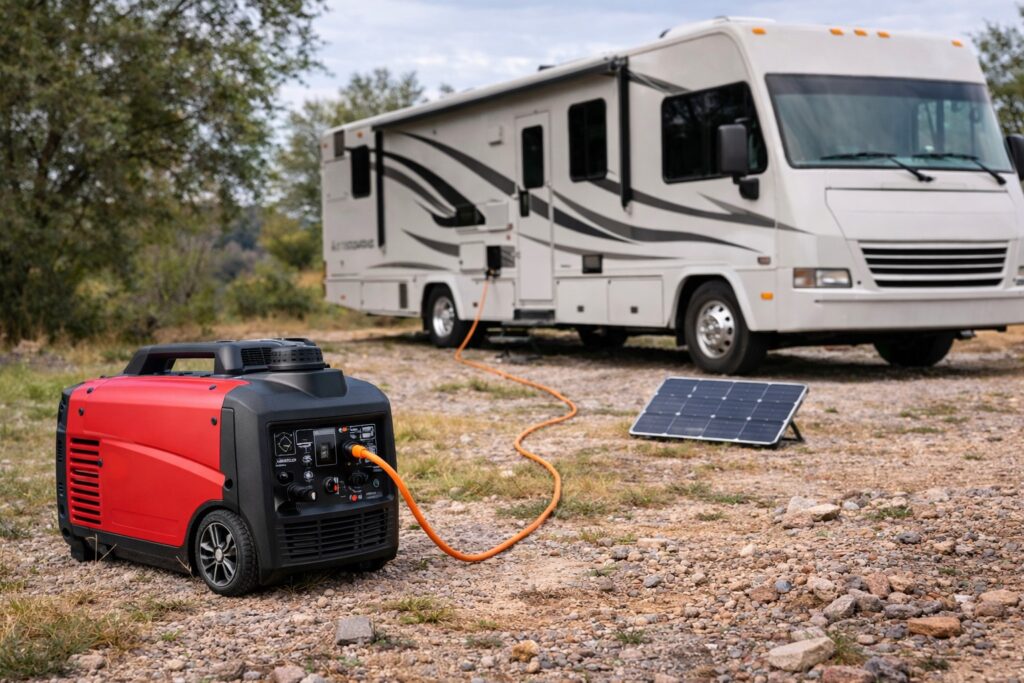
Final Thoughts: What Actually Matters When Using a Portable Generator with an RV
Portable generators can be a practical and reliable power solution for RVs and motorhomes when they are used with clear expectations and proper planning. They are not designed to replace shore power or fully mimic a built-in generator, but they excel in situations where flexibility, portability, and controlled power use are priorities.
The most important factors are not brand names or marketing labels, but real electrical demand, startup loads, and how power is managed inside the RV. When those elements are understood, many of the common frustrations people experience with portable generators disappear.
If you approach the setup intentionally—choosing the right size, limiting simultaneous loads, and following proper safety practices—a portable generator can handle essential systems reliably and safely. When expectations drift toward whole-coach operation or automatic convenience, the same equipment quickly feels inadequate.
The takeaway is simple: portable generators work best when they are used for what they are designed to do. Understanding that difference is what leads to a successful setup instead of trial-and-error.
From here, the next step is sizing—because knowing how much power an RV actually needs is what determines whether a portable generator will work well in your specific situation.
FAQ: Portable Generators for RVs & Motorhomes
Can a portable generator power an entire RV or motorhome?
In most cases, no. Portable generators are best suited for powering essential systems rather than running an entire RV at once. They work well for lighting, refrigeration, electronics, battery charging, and limited appliance use, but whole-coach operation typically requires a built-in generator or shore power.
What size portable generator is usually needed for RV use?
The required size depends on what you plan to run. Many RV owners find that portable generators in the 2,000–4,000 watt range handle basic needs well. Running high-draw appliances, especially air conditioners, may require higher surge capacity and careful load management.
Can a portable generator run an RV air conditioner?
Sometimes, but not always. A portable generator can run an RV air conditioner only if it has enough startup surge capacity and other electrical loads are kept off. Even then, performance can vary based on temperature, elevation, and whether a soft-start device is installed.
Is it safe to use a portable generator near an RV?
Yes, when proper safety practices are followed. Portable generators must be placed at a safe distance from the RV with exhaust directed away from doors, windows, and vents. Carbon monoxide safety is critical, and generators should never be operated inside or directly next to an RV.
Are inverter generators better for RVs than open-frame generators?
In many cases, yes. Inverter generators are typically quieter, more fuel-efficient at low loads, and provide cleaner power for sensitive electronics. Open-frame generators may offer higher output at a lower cost, but noise and power quality can be limiting factors for RV use.
Can a portable generator replace a built-in RV generator?
A portable generator can serve as a temporary or supplemental solution, but it is not a full replacement for a built-in RV generator. Built-in systems are designed for extended runtime, automatic integration, and whole-coach power, while portable generators require more manual operation and monitoring.
Do campground rules allow portable generator use?
It depends on the campground. Many campgrounds restrict generator use to certain hours or enforce noise limits. Even quiet portable generators may not be allowed during overnight hours, so it’s important to check campground rules before relying on one for power.
What is the biggest mistake people make when using portable generators with RVs?
The most common mistake is underestimating startup power requirements and trying to run too many appliances at once. This often leads to generator overloads, shutdowns, or frustration. Proper sizing and intentional power management prevent most issues.